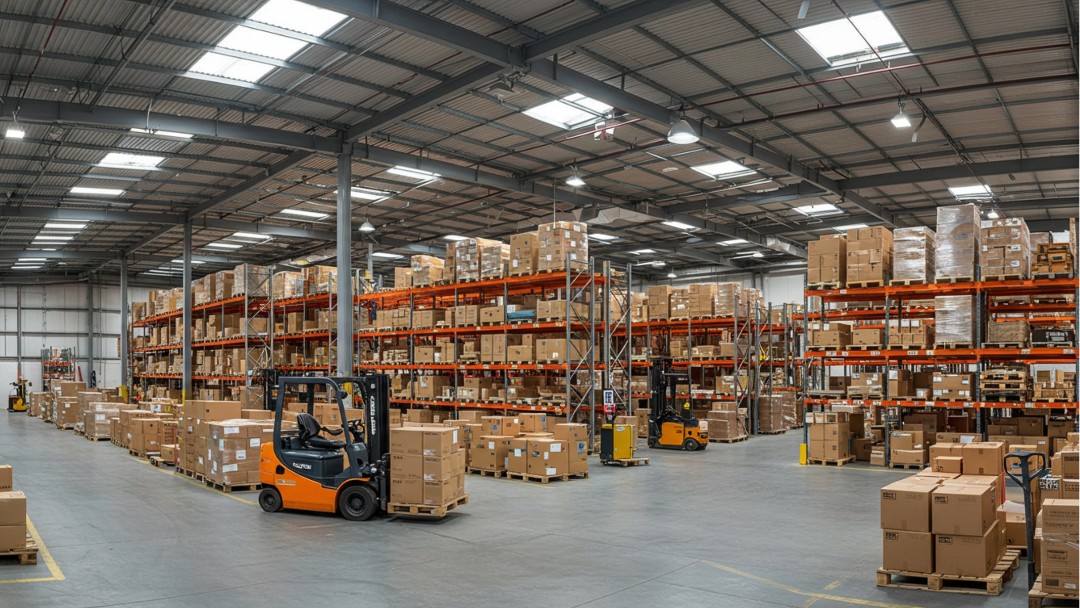
They Don't Want You To Know Where Surplus Gets Sold.
Every year, billions of dollars worth of surplus inventory quietly disappears from government warehouses and retailer stockrooms. It doesn't get destroyed. It doesn't sit forever. It gets sold—just not to you.
For decades, this inventory moved through a closed network of liquidators and wholesalers who'd buy in bulk, then flip it for profit. The deals were absurd. A $1,299 iPad for $6. A $450 PlayStation for under a dollar. But access was restricted to people with the right connections.
That system just got disrupted. A platform called GovAuctions.com is buying the same surplus in bulk and making it available directly to consumers through auctions. No middleman. No markup. Just the raw deals that were previously reserved for insiders.
Right now, they're offering $50 in free credit to new users. It's essentially a test drive. Browse the auctions, place a bid with house money, see if it's real. The offer could end at any time.
🎯 CLAIM YOUR $50 FREE CREDIT NOWWhy Has This Been Hidden For So Long?
Because there was never an incentive to make it public. Liquidators made their money by keeping the supply chain opaque. Buy low from government agencies and retailers, sell higher to discount stores and resellers, pocket the difference.
The system worked because consumers didn't know it existed. You'd walk into a discount store, see something marked down 30%, and think you got a deal. Meanwhile, that same item probably moved through three middlemen before it reached you—each one taking a cut.
GovAuctions cut out every layer. They source directly, warehouse it themselves, and auction it off to whoever shows up. The pricing reflects actual surplus value, not retail markup plus liquidation fees.
- Electronics: iPhones, iPads, gaming consoles, laptops—often new or lightly used from agency upgrades
- Appliances: KitchenAid mixers, power tools, furniture from overstock and returns
- Jewelry: Tiffany & Co. pieces, luxury watches from seizures and surplus
- Vehicles: Trucks, cars, motorcycles from government fleets and law enforcement
Pam in Illinois won Beats Studio Pro headphones for $7.51. Retail: $350. Regina in Idaho got a KitchenAid Stand Mixer for $19.15 instead of $450.
💰 BROWSE LIVE AUCTIONS WITH $50 FREEHow The Surplus Pipeline Actually Works
Government agencies upgrade equipment every few years. Retailers overorder seasonal inventory. Law enforcement seizes assets from criminal cases. All of it becomes surplus.
Traditionally, that surplus got auctioned off in massive lots to liquidation companies. A pallet of 50 iPads. A truckload of power tools. Quantities too large for individual buyers, prices too good to pass up for resellers.
GovAuctions operates in that same space—buying bulk surplus at rock-bottom prices—but instead of reselling to stores, they list individual items in consumer-facing auctions. You're bidding on the same inventory that used to go to wholesalers, except now you're getting the wholesaler's price.

Why Retailers Stay Quiet About This
Because it undermines their entire pricing model. If people realize they can get the same products for 90-95% off through surplus auctions, why would they ever pay full retail again?
The answer is they wouldn't. And retailers know it. That's why surplus liquidation has always been handled behind closed doors. Keep it quiet, move it through discount channels slowly, and hope consumers never connect the dots.
But now the dots are connected. The platform exists. The deals are visible. And once people see an Apple iPhone 16 Pro Max 512GB selling for $7.61 instead of $1,299, there's no unseeing it.
What's Available Right Now
The inventory changes constantly because surplus is always moving. One day it's iPads and gaming consoles. The next it's luxury jewelry and power tools. Check back in a week and there's a fleet vehicle listing that wasn't there before.
That's the nature of surplus. It's unpredictable. But it's also why the platform stays interesting. You're not browsing the same static catalog every time. You're seeing whatever just came in from the latest bulk acquisition.
Lorraine in Florida found Tiffany's Solitaire Diamond Stud Earrings listed at $1.51. They retail for $2,500. Calexan in Ohio won an iPhone 16 Pro Max for $7.61. These weren't advertised. They just showed up in the auction feed.
🔍 SEE WHAT'S LIVE RIGHT NOWWhy The $50 Credit Matters
Because it removes the barrier. You're not spending your own money to test the platform. You're using house credit to see if the deals are real. If you win something, great. If not, you risked nothing.
This is a customer acquisition play. They want people to experience the platform firsthand because once you see the pricing, you're hooked. But the offer isn't permanent. It's designed to drive early adoption, and when the budget runs out, it's gone.
If you've been curious about surplus auctions but skeptical about legitimacy, this is your chance to verify it yourself. Browse what's available. Place a bid. See what happens. The worst case is you don't find anything worth bidding on. The best case is you walk away with something worth hundreds for under $10.